Tuesday, February 23, 2016

Erwin Swaray ‘16 examines how odor impacts memory

Erwin Swaray ’16 (psychology major and neuroscience concentrator) vividly remembers the time he ran at a track tournament at University of Minnesota when he was younger, and had been outrun by a girl. But what unforgettable of that moment is not the fact that he lost, but the particular odor of a tree with pink flowers that he saw and smelt before the race. Since then, whenever he smells that odor, it takes him back to that time.


“It got me interested in how odor affects memory so I was thinking that my comps should be [on] how odor impacts what you remember,” explained Swaray. “By doing that, I’ve been able to create an experiment on how well you are able to recall according to which odor you smell.”


The topic of his comps is to examine the influence of an odor’s emotional salience when it acts as a retrieval cue for semantic memory. In other words, he intends to see if “emotional” odors influence, possibly enhance, a person’s memory when recalling a specific event. For example, in Swaray’s case, whether the smell of that tree did, in fact, help him recall his race at U of M more easily or not.


To find out the results of his hypothesis, he conducted mainly two separate experiments: a pilot study and the main study. He first tested 10 people on which scents evoked their strongest memory, meaning what smells proved to be the most emotional one, based on its familiarity, intensity, and pleasantness. Then he tested 40 people in his main study by making them recall pairs of words that they have seen while being exposed to different odors. The more pairs the subjects would remember, the more memory-evoking the odor proves to be.


One of his main study subjects, Khuaten Maaneb de Macedo ’16 (Biology) thought that memories of different words impacted how she recalled the incident but didn’t expect it had anything to with scent before the experiment.
“I feel like it may have hindered my memory a little bit because I was trying to figure out what exactly the smell was,” she said. “I know and I love coconut fragrances, but I couldn’t figure out what it was.”


Through his pilot study, he found out that despite individual differences, the smell of peppermint tended to evoke the most emotions from people while coconut being the least. His most emotional odor was the smell of popcorn. Through his main study, he discovered that the most emotional odor (mean value of the data was 9.5) led to a greater recall than the least emotional odor (mean value was 8.7), but the difference between the memory recall of the odors were not big enough to draw any significant conclusions.


However, Swaray believes that if his study was conducted in a larger scale, involving over 50 participants, he would have been able to see a greater trend and do further research on how odors impact memory. He hopes that it could even help students to study better and more effectively.


“If those odors can be used as a cognitive device when you are studying for a test, maybe you smell a particular odor and that’s going to help you recall the questions for the test better,” said Swaray.


After graduation, he wishes to work as a pharmacy technician and enroll in a pharmacy school, after taking more courses in chemistry and biology, to study about drugs and their effects.


This article was published on the Carleton website
https://apps.carleton.edu/now/stories/?story_id=1385350

Saturday, December 5, 2015

From a national delicacy to common street food, the transformation of Pastillas

by Jennifer Kwon
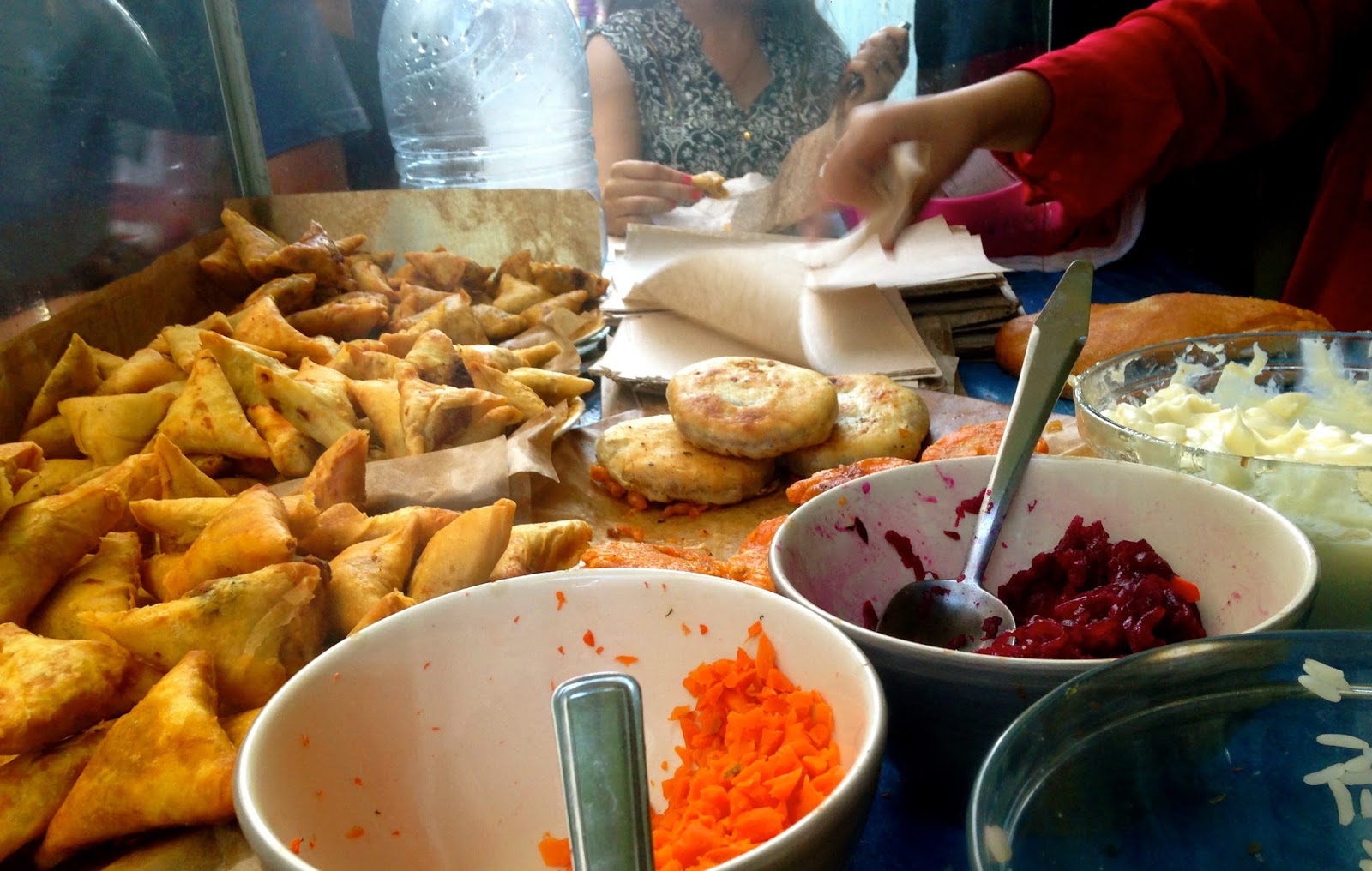
The mini pastillas are significantly smaller than normal pastillas in size but the savory flavor remains. (Photo by Jennifer Kwon) 
RABAT, Morocco — Pastilla is one of the most beloved dishes in Morocco’s already renowned cuisine, but many Moroccans cannot afford to regularly eat the 16 inch diameter layered phyllo dough stuffed with meat, which can cost 450 dirhams (about 45 US dollars) in a country where minimum wage is $250 dollars a month..  That’s where Imane Allawi, 20, comes in — offering 3 inch diameter mini pastillas that she sells for just 8 dirhams each, less than one US dollar.
“Pastillas are very expensive because there is meat and so many spices. So not all Moroccans can afford them,” said Adnane Kiras, a regular customer of Allawi’s pastillas.
Situated in the alleyway off the bustling streets of the old Medina, or souk of Rabat, the capital, Allawi’s ten year old shop is crowded with children in the afternoon as they skip home from school, and adults in the evening as they finish up a long day at work. Every thirty minutes, Allawi fries a fresh batch of pre-made pastillas, which she carries to her storefront from her home kitchen every morning.
Along with pastillas, Allawi’s shop offers other cheap, convenient snacks that are filling enough to replace meals. (Photo by Jennifer Kwon)
The small pastillas are the size of a child’s palm. A dish of pastilla usually takes at least three hours to make and requires more than 10 different spices, according to Brahim El Ataoui, a chef and waiter at the Center for Cross Cultural Learning in Rabat.
“People used to kill 24, 25 to 30 small pigeons to make one dish of pastilla,” explained El Ataoui. “It is more common to make it with chicken now, but even then you need one and a half chickens.”
The sweet taste of toasted almonds, cinnamon, sugar and honey starkly contrast the salty flavor of shredded chicken pieces soaked in local spices, including turmeric, cumin, and saffron, and herbs, including coriander, wrapped in many layers of crisp, fried dough, known as phyllo.
Even in the eyes of a professional chef like El Ataoui, pastillas correlate with wealth and “spending money.” The street pastillas of Allawi attempt to break this barrier and bring this luxury dish to the tables of Moroccans from all walks of life.

Friday, October 9, 2015

CCC Administers the Auctions for Lloyd’s Credit Notes


Lloyd’s American Trust Litigation was a unique coupon settlement. Normally, coupons are for commodities or goods. Here the coupons were for liabilities and debt. Despite the complications involved, CCC again successfully handled the transactions and auctions of the certificates.

It all started in 2002 when Citibank was accused of violating its fiduciary duties and responsibilities as the trustee of the Lloyd’s American Trust Funds by the plaintiffs representing Lloyd’s of London class members who were damaged.

Citibank was held responsible of repeatedly transferring money from one trust fund to another without permission, engaging in commingling of different trust funds, and failing to maintain appropriate records of the fund’s transactions.

Even though Citibank denied the accusations, it settled by issuing $8,500,000 in cash and $11,500,000 in coupons to class members who were underwriting members of Lloyd’s. These coupons were called Credit Notes (“Notes”) and could be used to receive “equitas premium” credit to reinsure one’s liabilities for prior underwriting periods.

As a part of Lloyd’s Reconstruction and Renewal (R&R) plan, these Notes provided a means to compensate for losses during all periods before 1993, since the New York State Department of Insurance determined that Lloyd’s had not maintained the required minimum surplus.

Here, CCC stepped in as the broker and administrator of auctions for the Notes among class members. The court has granted CCC the authority to facilitate a secondary market for the Notes in order to increase the redemption rate.

These Notes were in effect coupons off of Lloyds services, in this case usable as debt relief. They were distributed according to each class members’ amount of debt: the more debt a class member held, the more Notes he or she received. The Notes could be used to pay for all or a portion of debt to Lloyd’s.

As a secondary market maker, CCC conducted auctions for class members who wished to sell a portion of their Notes or buy more Notes. The bargain price of the coupons was adjusted in each auction to accommodate the appropriate needs of the sellers and buyers of the coupons. 


In the end, CCC facilitated the transactions of approximately 67% of distributed credit notes. It was an impressively high rate, considering the fact that many class members had used their own credit notes to eliminate their debt. Through this case, it proved that CCC can not only successfully trade a good or a service but also accomplish trading debt relief.


This article was written during my internship at Chicago Clearing Corporation (CCC) in 2015. 

Coupon Administration Experts at Chicago Clearing to Administer Korean Air Passenger Antitrust Litigation


Chicago Clearing Corporation (CCC) will soon begin administering a major settlement in the airline industry, Korean Air Passenger Antitrust Litigation. 

As of December 2, 2013 when the Court gave a final approval, Korean Air will pay $39 million in cash and additional $26 million in travel vouchers (also called, coupons) to settle a class action lawsuit alleging that it had engaged in a price-fixing scheme. Asiana Airlines previously agreed to pay $21 million in cash and coupons. 

But for some potential claimants, this may not feel like a typical happy ending, justice-served fairy tale. 

Shortly after the court was dismissed, more than a dozen passengers voiced their dissatisfaction. One of their biggest complaints was the notoriously low redemption rate for vouchers.

Putative class member Said Nedlouf argued that many class members would most likely throw away the coupons after realizing the hassle of trying to sell them.                 

“Common sense suggests that a large number of class members will likely discard the coupon in disgust after realizing that going to the trouble of selling the coupon is just not worth it,” he told the news service Law360.                 

This is exactly why CCC has been hired to be the coupon administrator, voucher consultant, and market maker for the Korean Air Passenger Antitrust Litigation. 

“While we understand the objectors’ concerns, we are quite confident we can alleviate their worries and create a fair market for the coupons,” said James Tharin, founder and owner of CCC.

As the voucher consultant, CCC proposes the rules and means of redemption and transfer for the Korean Air coupon. Then as the coupon administrator, it facilitates the redemption of coupons. CCC will staff, train, and manage a call center to respond to inquiries regarding coupons or the secondary market. In addition, it plans to create a coupon database that is available 24/7 online. 

CCC anticipates the creation of a series of two-sided auctions where a large amount of coupons can be sold and bought at one price. It is also hoping to keep a transparent book displaying the best bids and offers in the marketplace where a buyer and seller can transact business.
     
Founded in 1992 by Mr. Tharin, CCC has over twenty years of proven success in developing, administering and creating secondary markets in class action coupon settlements. It has created 13 unique coupon markets and recovered more than $200 million dollars for harmed class members.


This article was written during my internship at Chicago Clearing Corporation (CCC) in 2015. 

Chicago Clearing Kicks Off with BMW M5 Litigation case

In 1991, a class action lawsuit was filed against BMW by the purchasers of 1988 M5 BMW automobile (model E28 M5) who claimed that the company produced more than it had originally stated. They alleged that the overproduction of vehicles caused a diminution of value of the limited edition model. 

BMW settled the litigation by issuing transferable discount certificates worth of $4,000 each to eligible class members that could be applied towards the purchase or lease of a new BMW. If class members did not wish to use their certificates, they could sell them instead. 

At around the same time, Chicago Board Options Exchange market maker named James Tharin received a call from the defense attorney representing BMW in the class action lawsuit. The plaintiff’s attorney In the case demanded BMW find a market maker to bring value to the class members who chose not to redeem their coupons on the purchase of a new BMW. The defense counsel knew Jim’s reputation as an expert market maker, called Jim, and an industry was born. 

Following the Court’s instruction, Jim founded Certificate Clearing Corporation (CCC) and created the first market for transferable class action coupons. 

As the designated market maker of the settlement, CCC worked to optimize the coupon market by buying BMW certificates that class members did not want to use and reselling them to customers planning to purchase or lease of a BMW vehicle. 

CCC facilitated the buying and selling of BMW certificates and by doing so, increased the efficiency of the overall market and redemption rate of the coupons. 

As a result, CCC bought and sold over 630 certificates and effectuated a 60% redemption rate. Since only 7% of the BMW M5 Litigation class members used their own coupon to purchase or lease a new BMW, CCC played a crucial role in increasing the usage and value of these certificates. 

Chicago Clearing was off to a great start with the BMW M5 Litigation, paving the way for the continued success of over 20 settlements in the next two decade. To this day, CCC remains to be the only entity that has created a successful class action coupon market more than once. 


This article was written during my internship at Chicago Clearing Corporation (CCC) in 2015. 

Settlement Rumors Swirl Around Petrobras Scandal

Brazil's Petrobras corruption scandal has garnered a lot of attention in the U.S., and with good reason. A Brazil-based integrated oil and gas company, Petrobras has been accused of inflating the cost of contracts for construction and engineering companies and other suppliers, and then using the excess for kickbacks to company executives and bribes to politicians and political parties.

Further complicating matters, both here and especially in Brazil, is the fact that the Brazilian government itself owns over 50% of the company. The corruption is allegedly intertwined with the state itself. 

The U .S. Department of Justice has taken note of the scandal because Petrobras shares were widely traded in the United States. In fact, it was the largest foreign company on the New York Stock Exchange until recently. Petrobras’ market value has steadily declined to less than $40 billion from almost $300 billion seven years ago.

Last week Reuters reported that there might soon be a settlement with U.S. authorities. If there is, it could be the largest settlement of corporation corruption charges since 2008, when Siemens AG settled with the DOJ and the Securities and Exchange Commission for $800 million. According to Reuters, settlements with the US could be over $1.6 billion.

Petrobras officials have denied that a settlement is in the works, but rumors persist. The DOJ and the SEC declined to comment.

Whatever is happening here in the US, Brazilian authorities are clearly trying to move beyond the scandal. According to Reuters America Latina, the Brazilian government today offered offering over 20 companies that have been implicated in the scandal a chance to pay $4.2 billion in fines for the right to resume business with Petrobras. This move was strong enough to nudge Petrobras shares up 2.2% in today’s trading.

CCC will be carefully tracking this scandal, as well as domestic litigations related to it, and will reporting on its progress. Should a settlement ever emerge with a shareholder class, CCC will be ready to file claims for any investor.


This article was written during my internship at Chicago Clearing Corporation (CCC) in 2015.

Saturday, May 23, 2015

African Cooking and Cultural Reggae


Starting with the Reggae Night at the Cave on Friday, May 8, to the Jollof rice cook-off between Jeffrey Bissoy-Mattis ‘16 and Kennyi Aouad ‘17 on Saturday, May 9, the campus celebrated African culture through its music, dancing, and food.


Bissoy ‘16, the president of Men of Carleton (MOC), whose family comes from Cameroon initially thought of the Reggae Night event and reached out to Aouad ‘17 and Jojo Kuria ‘16 who lead the Afro-Caribbean Association (ACA) on campus.


“I’ve been having this idea since my freshman year because there is almost nothing here that represents African or even African-Caribbean culture. I get jealous when other cultural organizations or associations like ASIA or LASO host a lot of huge festivals throughout the year, and it got me wondering why don’t we ever do things like that?” said Bissoy.


He also elaborated that he has not been always satisfied with the party scene at Carleton.


“Coming from an African heritage, dancing is huge. You cannot go to a party and not dance. So I have been disappointed by the lack of dancing at parties here.”


He explained that even though the Cave event was advertised as Reggae Night, the playlist had a mixture of African pop and Latin pop music along with Reggae music. They were planning to bring in musicians from the city, but the transition from winter to spring term and academics prevented them from applying for additional funding.


The Jollof cook-off that took place the next day at the Cassat basement was an idea that both Bissoy and Aouad came up with when they were “talking smack to each other” on who could cook better jollof rice.


“I think every culture has their variation of it such as fried rice. With jollof rice, rather than boiling your rice, you have to prepare the broth and seasonings in which you can boil it. So in this case, I make jollof rice with tomatoes or spices and add vegetables and chicken broth,” said Aouad.


In the end, Aouad whose family comes from Ghana received more votes from the judges and participants of the cook-off. He pointed out that jollof rice is popular in West Africa.


Wanchen Yao ‘17 who had no prior knowledge or experience with jollof rice claimed that she enjoyed the food and the company a lot. The presentation and friendly competition between the two also added flavor to the event.


The people who tasted their rice agreed that they had different styles of cooking jollof rice. While Bissoy’s rice was lighter, Aouad’s rice was more spicy and savory. Yao said she liked them both, but Kennyi’s appealed to her a bit more.


“It was fun, everybody knew each other so we got straight to the presentation and tasting of the Jollof. Everyone who tried the food liked it a lot. It was just a group of people having fun and enjoying Jollof,” remembered Yao.


This article was published by
The Carletonian (May 22, 2015)